
Abbott Fuller Graves is different
His paintings don't announce themselves. They sit there quietly and, somehow, the room feels better because of it. Calmer. Softer. More settled. That's probably why so many of his works feel unexpectedly right in living spaces.
Some paintings make you stop the moment you walk into a room.
You notice them first.
Sometimes — too much.
Not galleries. Not museums. Actual rooms where people live.
Most people don't choose a living room painting because of art history. They choose it because they don't want to get tired of it. They want something that still feels good after a long day, something that doesn't fight with the furniture or the light coming through the window.
Graves understood that kind of balance very well.
Garden scenes and floral still lifes feel different
If you look closely at his work, you'll notice two moods that keep coming back.
Garden scenes feel open. There's air in them. Depth. They work especially well in larger living rooms or spaces with natural light. A window nearby helps but it's not mandatory. The light is already inside the painting.
Floral still lifes are more contained. They feel closer. These are the paintings that work above a sofa, near a reading chair, or in rooms where you want warmth without visual noise.
Some people instinctively prefer one over the other and that usually tells you a lot about how they like their space to feel.
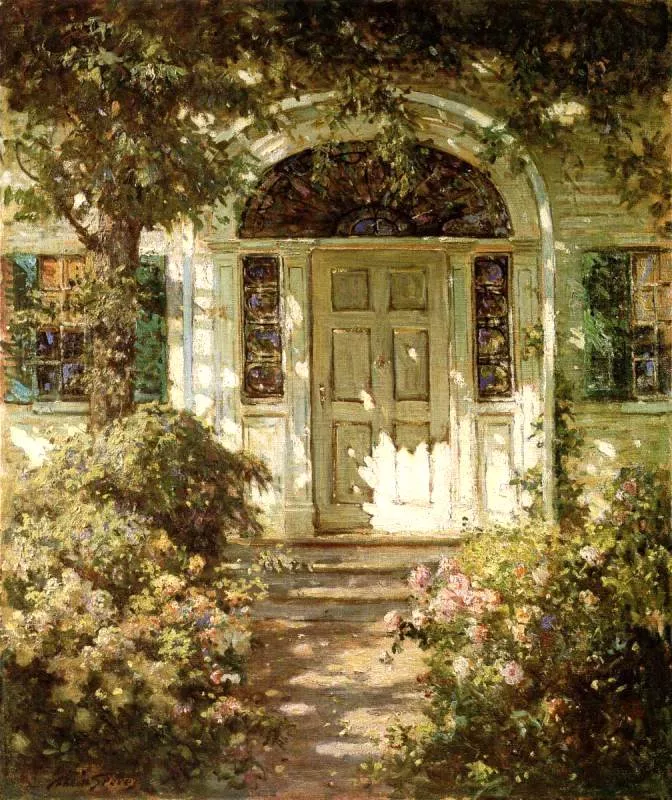 If you want to look closer at this painting, there's a dedicated page for The Doorway with additional details and images.
Doorway and Garden is one of those works that quietly solves the problem for many people.
There's an interior and an exterior but no tension between them. Light moves naturally through the space. Nothing feels staged. You don't look at it and think about composition or technique. You just accept it.
That's often a good sign.
This is the kind of painting people live with for years without questioning the choice.
Color matters more than subject here.
Graves used greens, creams, soft yellows and muted shadows in a way that ages very well. Even when furniture changes, walls get repainted or styles shift a little, these paintings usually keep working.
They don't lock you into a specific look.
That flexibility is part of their appeal, especially for collectors who don't want their art to dominate the room.
Size is another thing people overthink.
Bigger isn't always better with Graves. Many of his paintings feel most comfortable at medium sizes, where the details stay intimate and the overall effect remains calm. Oversized versions can sometimes lose that quiet balance.
Seeing this painting in different sizes and formats helps more than most people expect.
You can view available versions of The Doorway here and get a better sense of what actually feels right.
If you're curious how Abbott Fuller Graves' paintings look in different sizes or variations, browsing what's currently available makes the choice much clearer. Side by side, differences become obvious and personal preferences show up fast.
You can explore available Abbott Fuller Graves paintings in the main gallery and get a better sense of what actually feels right.
Some art is about making a statement.
Graves never painted to compete with a room.
His work settles into it —
like light through a familiar doorway,
noticed more over time than all at once.
That quiet presence
is often what makes a space feel complete.
Art Curator & Garden Historian
Eleanor Graves Whitmore grew up in a New England family where peonies, roses and wisteria were treated almost like relatives, the same flowers that Abbott Fuller Graves painted again and again. With a degree in Art History from Smith College and further study in Botanical Illustration at the New York Botanical Garden, she follows the places where painting, plants and domestic life overlap.
Her essays for abbottfullergraves.org read less like academic papers and more like letters from a friend, wandering through color, light and memory in a sunlit garden. Her work has appeared in The American Gardener and Fine Art Connoisseur and when she is not writing, she is usually outside, coaxing old heirloom roses back into bloom in her Massachusetts backyard.
Editor: Abbott Fuller Graves Estate Archives
Contact:
[email protected]